
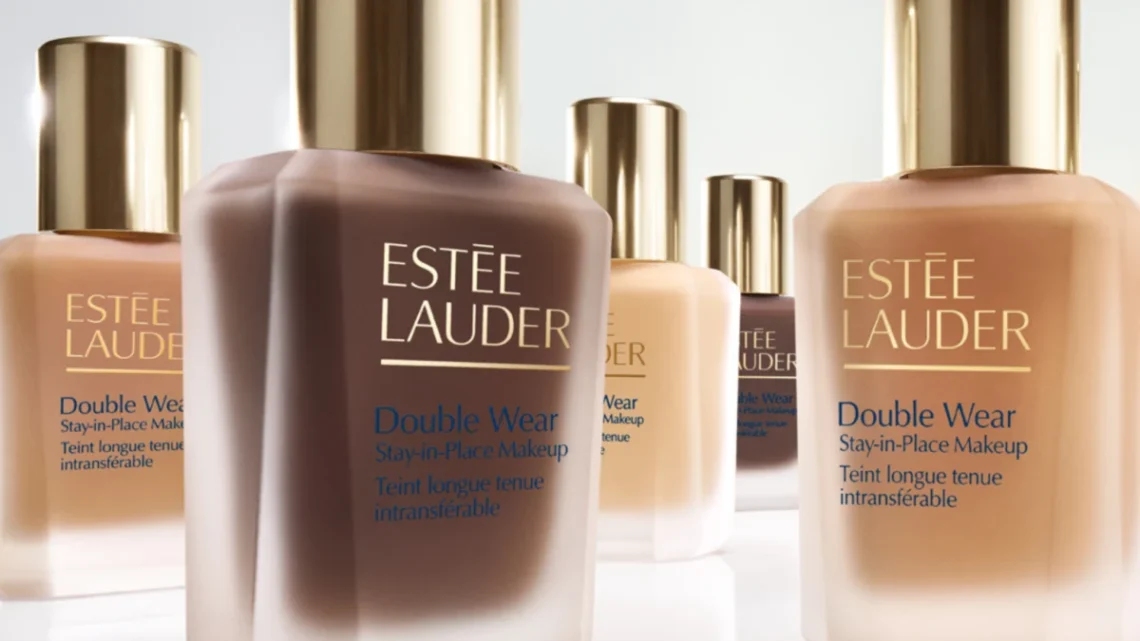
The collapse of the proposed $40 billion marriage between Estée Lauder and Puig this past May served as a seismic wake-up call for the global beauty industry. What was envisioned as a strategic powerhouse—a union combining Lauder’s prestige dominance with Puig’s coveted fragrance portfolio—evaporated before it could be formalized.
Since the deal’s disintegration, market reactions have been telling. Estée Lauder’s shares have climbed roughly 4%, reflecting investor relief, while Puig’s valuation has dipped by more than 4%. This divergence signals a fundamental change in how the financial markets perceive value in the beauty sector. The era of "bigger is better" is officially on ice, replaced by a ruthless demand for operational discipline, strategic clarity, and cultural alignment.
The Anatomy of a Failed Union
The Lauder-Puig breakdown was a masterclass in why strategic logic on paper often fails the reality test. While the deal promised scale for Puig and an expanded fragrance footprint for Lauder, it foundered on the rocks of internal complexity.
The negotiations were reportedly marred by friction over contract terms for high-profile acquisitions like Charlotte Tilbury and deep disagreements over valuation. Beyond the numbers, the "clash of dynasties"—two family-controlled giants—created a perception of corporate bloat and potential integration chaos. Investors, already wary of Lauder’s ongoing struggle with its China operations and its reliance on traditional U.S. department stores, viewed the merger as a dangerous distraction rather than a growth catalyst. For Lauder, the deal threatened to derail a fragile profit-improvement plan that management had been aggressively selling to the market.
A Tale of Two Strategies: The L’Oréal Model
The failed Lauder-Puig merger stands in stark contrast to the tactical surgical precision of L’Oréal’s recent activities, most notably its $4.6 billion acquisition of Kering Beauté.
Unlike the proposed Lauder-Puig merger, which felt like a collision of two gargantuan, complex entities, L’Oréal’s approach was a masterclass in structured asset purchasing. By focusing on a licensing and asset-based agreement, L’Oréal managed to secure high-value luxury beauty assets without the administrative baggage of a full-scale corporate integration.
Market analysts point to this as the new "gold standard." By preserving strategic focus and avoiding the dilution of core management energy, L’Oréal has maintained its upward momentum. The deal was large enough to move the needle, yet small enough relative to L’Oréal’s $240 billion market cap that it did not raise governance alarms. It proved that in today’s market, success is defined by the ability to bolt on growth without breaking the machine.
The New Frontier: Kenvue and the "Everyday" Shift
While the luxury and prestige segments grapple with consolidation, the broader personal care market is seeing its own massive shift. The $48.7 billion combination of Kenvue and Kimberly-Clark represents a different breed of merger—one focused on everyday essentials.
By bringing brands like Neutrogena, Aveeno, and Tylenol under a broader umbrella that includes Kimberly-Clark’s paper goods (Huggies, Kleenex, Cottonelle), the deal aims to capture the entire consumer health and wellness journey. However, the market remains divided. While Kenvue’s stock benefited from the initial takeover premium, Kimberly-Clark has faced pressure from investors concerned about the debt load required to finance the acquisition, the inherent risks of merging disparate supply chains, and ongoing litigation concerns surrounding Tylenol. This deal serves as a stress test for the industry: Can a company truly bridge the gap between "wellness" and "utility" without collapsing under the weight of its own debt?
Expert Analysis: Why Size is No Longer a Moat
In an effort to understand what makes a merger "viable" in 2026, Beauty Independent consulted with seven leading investors, consultants, and market strategists. The consensus is clear: the market is punishing complexity and rewarding simplicity.
The Problem with "Whale" Mergers
Investors are increasingly allergic to massive, horizontal mergers between large public companies. As one expert noted, "Corporate mergers are challenging to execute in general and even harder with family-controlled dynasties." The risk of "cultural indigestion" is too high. When two companies are of similar size, the integration period—often lasting years—can paralyze innovation. For Estée Lauder, a merger would have signaled a lack of discipline at a time when the company desperately needed to fix its house, not add new wings to it.

The Rise of the "Nouveaux Strategics"
Lindy Firstenberg, Director of Beauty, Health and Wellness at AlixPartners, argues that the industry doesn’t need more "whales." Instead, it needs a healthy middle class of "nouveaux strategics"—companies in the $500 million to $2 billion range that possess operational rigor, category diversification, and the ability to expand internationally.
"We don’t need to create more whale strategics through these massive M&A deals," Firstenberg says. "We need to create more viable mid-sized players that have strong operations and can challenge the status quo."
The Emerging "Wellness-Beauty" Thesis
Perhaps the most significant finding from our experts is the blurring of lines between beauty, health, and nutrition. Consumers are no longer shopping by category; they are shopping by outcome.
Wendy Salisko, co-founder of WADE, highlights the potential in the "GLP-1 consumer" segment. As individuals shift their spending from traditional retail toward wellness, supplements, and clinical aesthetics, the companies that can bridge these worlds will win.
"The company that is able to build a credible bridge between topical and ingestible wellness will own a category that doesn’t fully exist yet," Salisko explains. She points to Unilever’s aggressive play in the wellness space—acquiring brands like Nutrafol, SmartyPants, and potentially Thorne—as the blueprint. This strategy provides a "consumer view" that connects skin health, hair health, and internal nutrition under one umbrella.
The K-Beauty Disruption
Another factor changing the M&A landscape is the rise of independent infrastructure, specifically in K-Beauty. With retailers like Olive Young now operating at scale in the U.S. and North America, the traditional "acquire and absorb" model is becoming obsolete.
Instead of Western giants acquiring Korean brands to "slot them in," we are seeing a shift toward partnership models. In these structures, the innovation engine remains in Korea, while the Western partner provides the logistical muscle and margin architecture. This preserves the "magic" of the indie brand while providing the global scale that usually requires a decade to build.
Implications: What Comes Next?
The fallout of the Lauder-Puig deal has left the industry with three clear takeaways for the future of M&A:
- Strategic Clarity over Scale: Investors will continue to devalue companies that engage in "growth for growth’s sake." Future deals must demonstrate how they simplify the business, not complicate it.
- The Ecosystem Approach: The next generation of successful mergers will likely be between non-traditional partners. A beauty brand merging with a longevity clinic or a biotech lab is more likely to yield long-term value than two heritage perfume houses combining.
- Operational Capability as Currency: Value is no longer found just in brand IP. It is found in the ability to operate across channels, maintain supply chain agility, and navigate the "danger zones" of scaling an indie brand to a mid-market leader.
As we look toward the remainder of the year, the industry is entering a phase of "consolidation by necessity." The companies that will thrive are those that recognize when they are in a "danger zone" and choose to partner—not to become a monolith, but to become a more effective, specialized part of the modern consumer’s wellness ecosystem.
The death of the mega-merger isn’t a sign that beauty deal-making is slowing down; it is a sign that it is growing up. Investors are demanding that management teams prove their value through execution rather than just acquisition. For founders, this is a golden window: build a brand that solves a real consumer need at the intersection of health and beauty, and you become the most valuable asset in the room—provided you choose your partner with the same care you used to build your product.


